Celebrity Death Bot Is a Memento Mori Machine
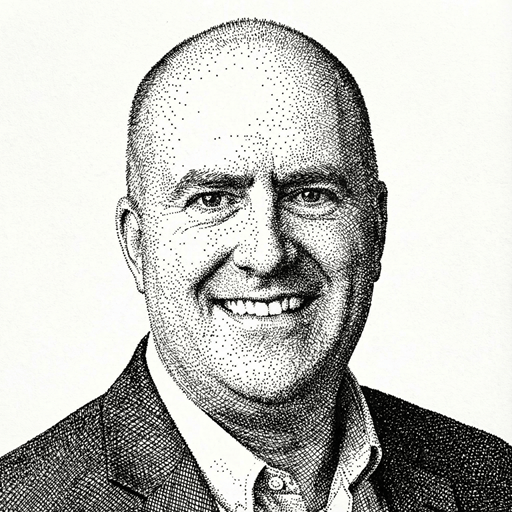 Bruce Hart
Celebrity Death Bot looks morbid until you realize it is mostly about paying attention.
People periodically tell me that Celebrity Death Bot is weird.
Maybe weird and a little morbid.
Fair.
It is a website and social feed that notices when public figures die. There is no way to describe that without sounding at least a little strange.
But the longer I have lived with it, the less I think of it as a death site. It is closer to a small, automated memento mori.
Memento mori, roughly: remember that you must die.
That sounds dark. I think it is the opposite.
Remembering death is an old way to appreciate life
The phrase is Latin, but the idea is older than any one phrase. Stoic writers kept returning to mortality as a practical tool. Not because they were trying to be bleak, but because a finite life changes the math.
If time is unlimited, every annoyance can expand to fill the room. If time is limited, a lot of petty stuff shrinks back to its actual size.
That is the useful version of memento mori.
Not everything is meaningless.
More like: stop pretending this goes on forever.
You can see versions of this across history. Roman art used skulls and other symbols to flatten status. A famous Pompeii memento mori mosaic puts a skull between symbols of wealth and poverty, a blunt little reminder that fortune turns and everybody ends up on the same side of the ledger.
Medieval and early modern Europe kept the idea going through tombs, mourning rings, skull watches, hourglasses, wilting flowers, and vanitas paintings. The Science Museum describes memento mori objects as reminders of death's inevitability and life's brevity. The Tate gives the compact art-history version: a memento mori is a reminder that you must die.
The objects can look severe from the outside. A skull on a desk. A watch shaped like a skull. A painting with a candle burning down.
But the point is not skull fandom.
The point is calibration.
The feed makes the abstract concrete
Death as an abstract concept is easy to ignore. Mortality as a notification is harder to file away.
That is part of what I like about Celebrity Death Bot. It takes this giant fact that we all know and gives it a steady, specific shape.
A name. An age. A short description. A link.
Sometimes it is someone I grew up seeing on television. Sometimes it is someone whose work shaped a field I care about. Sometimes it is someone I have never heard of, which is often where the best rabbit holes start.
The weird thing is that the alerts rarely make me feel gloomy. More often, they make me curious.
I usually read the Wikipedia article. That little habit has taught me a lot. Not in a grand, scholarly way. More like wandering through a hallway of lives that were adjacent to mine without my knowing it.
Someone wrote a song I know. Someone acted in a movie that sat in my childhood memory. Someone invented a tool I use without thinking. Someone was a minor political figure, a scientist, a broadcaster, a designer, an athlete, a troublemaker, a survivor, a person with a weird second act.
Each alert is a small doorway.
The little biographical details are the whole thing
Gene Shalit died this week at 100. If you are of a certain age, he was the movie review guy from the Today show with the hair, mustache, bow ties, and relentless puns.
I remembered him instantly, then realized I probably had not thought about him in years.
That is exactly the kind of alert I like.
Reading about him, I learned a handful of things I had either forgotten or never knew. He spent decades on Today. He had been Dick Clark's press agent before a falling out during the payola era. He and his wife Nancy had six children. Nancy died of cancer in 1978. Their daughter Emily later died of ovarian cancer after living for years with multiple sclerosis.
That is not trivia in the cheap sense. It is texture.
A person who occupied a goofy little corner of my childhood TV memory also carried a long private life, a family, losses, work, controversy, habits, friendships, and all the ordinary gravity that gets flattened when somebody becomes the pun guy.
Celebrity is strange that way. Public people become symbols. Then death quietly turns them back into biographies.
Another recent example for me was Sir Tony Hoare, who died in March at 92. I knew the name because of quicksort, one of those algorithms that shows up in every computer science education. I also knew the famous null reference story, where Hoare later called it his billion-dollar mistake because of the bugs and vulnerabilities that followed from that design choice.
But even there, the alert nudged me past the label.
Hoare was not just quicksort or null. He worked on formal methods, program correctness, concurrency, and the idea that software should be made simpler and more reliable. That is a whole life spent trying to make computation less chaotic.
You can get a surprising amount of humility from reading obituaries for people who were very good at something.
It is not death watching. It is attention training.
I get why some people find the project odd. A bot that reports celebrity deaths is not exactly a warm premise.
But I do not experience it as waiting for bad news. I experience it as a recurring reminder that life is real, finite, specific, and often more interesting than the summary line we attach to people.
It also does a useful trick on my own perspective.
A work annoyance is still annoying. Bills still exist. Servers still break. The dentist is still the dentist. I am not claiming that mortality awareness magically turns adult life into a calm philosophical retreat.
But it does resize things.
We are temporary bags of meat on a rock hurtling through a vast and mostly empty space. That sentence sounds ridiculous, but it is also basically true. Remembering it makes some burdens feel less absolute.
Not gone.
Just smaller.
Memento mori works because it interrupts the illusion of permanence. It taps you on the shoulder and says: this, too, is temporary. So maybe answer the text. Maybe take the walk. Maybe make the thing. Maybe stop giving so much oxygen to a problem that will not matter in a year.
The internet can still be a memory machine
One of the better uses of the web is remembering people in public.
Not perfectly. Not completely. Not without error. But meaningfully.
A Wikipedia page, an obituary, an old interview, a clip, a bibliography, a weird archived fan page, a social post from someone who knew the person. All of that turns a name in a death notice into a life with edges.
That is why I still like the project. Celebrity Death Bot is small and odd, but it points outward. It says: here is a person who was part of the world, maybe part of your world, and now is a good time to notice.
That is not morbid to me.
It is a little act of appreciation.
You can check it out at celebritydeathbot.com or follow the feed at @celebdeathbot.